
Buying Rural Property on Vancouver Island? The Septic Questions to Ask Before You Sign
Written by Jordan Huscroft, P.Geo. · Pacific Rim Wastewater Solutions Ltd.
Published · Updated · 13 min read
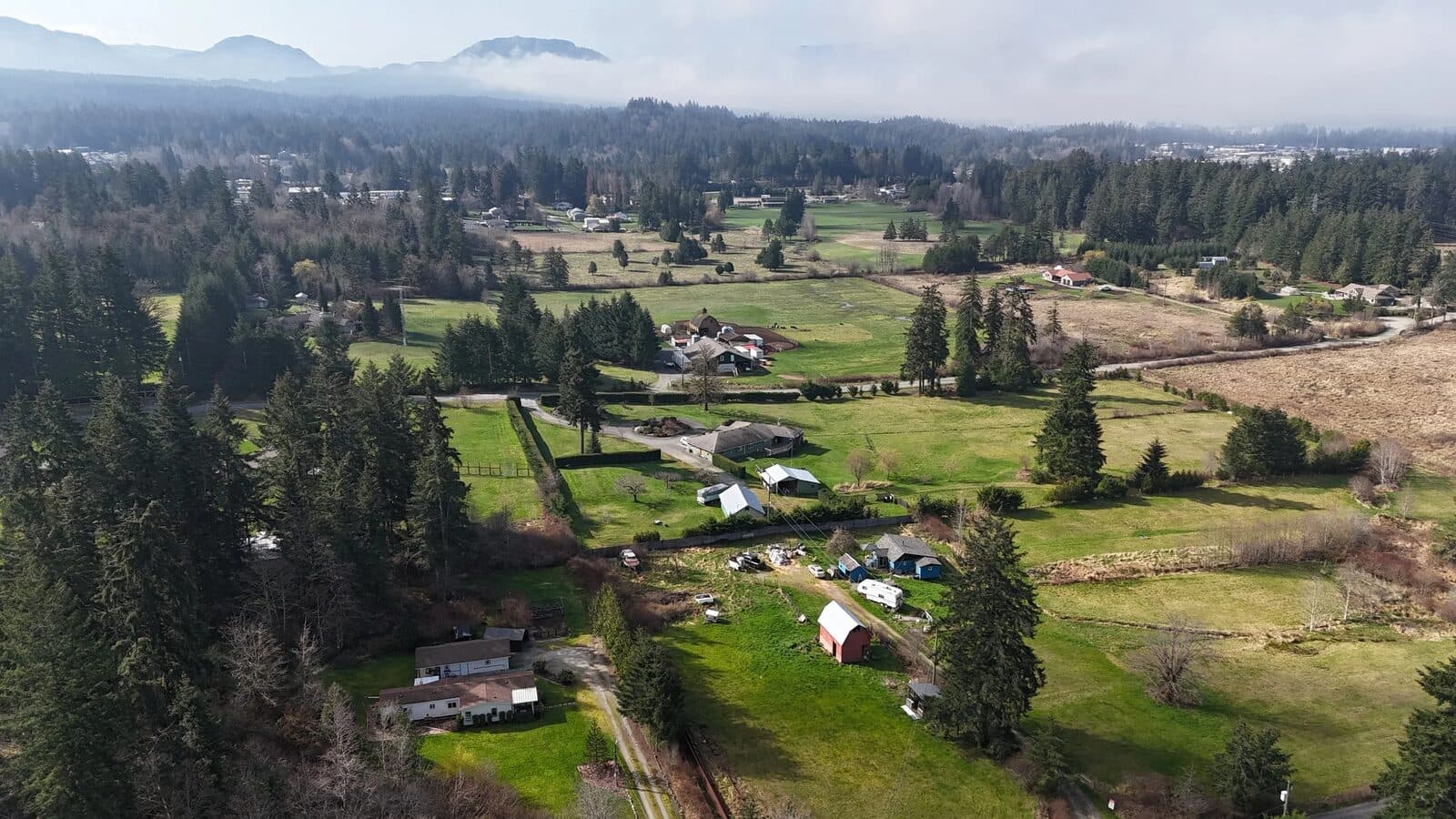
If you are buying rural property on Vancouver Island, there are five septic questions worth answering before your subjects come off: does a filed record exist with Island Health, does the filed system match the house that is actually there, is there a covenant on title, is there room on the lot for a second dispersal area, and what season are you standing on the ground in. The first one costs $50 and a few days. The last one is the question almost nobody asks, and it is the one that most often turns into a five-figure surprise.
I am a Professional Geoscientist who designs onsite sewerage systems across the Alberni Valley, Barkley Sound, the west coast and the mid-Island. A meaningful share of my phone calls come from people who already own the property. This post is written for the people who call before.
1. Is there a filed record with Island Health?
Since the Sewerage System Regulation (B.C. Reg. 326/2004) came into force on May 31, 2005, every new or altered system has to be filed by an Authorized Person — a Registered Onsite Wastewater Practitioner, a Professional Engineer, or a Professional Geoscientist. Two documents result:
- The Record of Sewerage System (RoSS) — filed before construction, describing what is going to be built.
- The Letter of Certification (LoC) — provided after construction, within 30 days of completion, certifying that what was built will not cause a health hazard.
You can order both. Island Health releases sewerage records through its Request for Release of Information form at $50.00 per property, and states that there should be records for all systems from 2005 onward, and for most systems installed between 1990 and 2005. Older than that, expect gaps.
Two things to understand about what you are reading when it arrives.
First, a filing is a two-year window, not a permanent blessing: construction must be completed within two years of the date Island Health stamps the Record, and a second filing after that costs another $200. A stamped RoSS with no matching Letter of Certification is a live question, not a finished system.
Second — and this surprises almost every buyer — Island Health is explicit that it "does not approve the sewerage system design nor does the Health Authority routinely review Filing documents for their technical merit." BC runs a professional-reliance model. The health authority receives the paperwork; the Authorized Person owns whether the system actually works. A filing on record tells you a qualified person put their name to it. It does not tell you the system was inspected by a regulator, because it wasn't.
2. Does the filed system match the house that is standing there?
This is the check that catches renovations. Septic systems are sized on daily design flow, which is driven by bedroom count, not by how many people are currently living there. As a rough guide, a two-bedroom dwelling designs to roughly 1,000 L/day, three bedrooms to roughly 1,300 L/day, and four bedrooms to roughly 1,600 L/day.
So: pull the bedroom count off the filed record and walk the house. If the record says three bedrooms and the listing says five — or there is a suite over the garage, or a den that is plainly a bedroom — the system in the ground was designed for a smaller house than the one you are buying. Overloading is one of the reliable ways to end a dispersal field early, and the remedy is a new system at current prices, not a repair.
While you have the record open, check the treatment type, because it sets the ongoing obligations you are inheriting:
| Treatment type | What it is | Effluent standard | Ongoing sampling |
|---|---|---|---|
| Type 1 | Septic tank and effluent filter; the soil does the finishing treatment | No numeric standard in the regulation | None |
| Type 2 | An active treatment step — an aerobic unit or an engineered sand filter | Under 45 mg/L BOD₅ and under 45 mg/L TSS | BOD and TSS, roughly annually |
| Type 3 | A treatment unit plus disinfection, usually UV | Under 10/10, plus median fecal coliform under 400 CFU/100 mL | BOD, TSS and fecal coliform, roughly quarterly, plus UV bulb service |
Every one of those types requires a filed maintenance plan — including a plain Type 1. And a Type 1 system on the Island very often includes a pump to lift or pressure-distribute effluent to the field, which means power, a control panel, and a high-water alarm to check. "Type 1" does not mean "nothing to maintain and nothing to fail."
If the property has a Type 3 system, ask specifically when the UV bulb was last serviced. A burned-out UV lamp fails silently — the system quietly drops to Type 2 performance with nothing visible to the homeowner — and under the regulation only a professional may change it. Unserviced UV is one of the most common things I find on systems that everyone believed were fine.
There is more detail on all three in my post on Type 1, Type 2 and Type 3 treatment.
3. What is on title?
Order the title search and read it for a Section 219 covenant. Before 2005, the health authority frequently required one to be registered when a lot was created or a system permitted, reserving the best ground on the parcel exclusively for a future septic field so it could never be built on, paved, or filled.
The intent was sound. The side effect is that thousands of Island titles still carry 30- to 50-year-old covenants sitting on exactly the flat, sunny, well-drained piece of land you were planning to put the shop or the accessory dwelling on. If your plans for the property depend on that ground, price the covenant into the deal — most are removable or modifiable, typically in five to ten weeks, but that is a process with a cost and a timeline attached. I have written up the full covenant removal process, and the covenant removal service page explains what a release package involves.
4. Is there room for a second dispersal area?
When land is subdivided, every proposed lot has to demonstrate both a primary and a reserve dispersal area on suitable soil, meeting every setback. Existing lots carry no such obligation — but the question is just as important to a buyer, because a dispersal field is a consumable. It has a service life, and when it ends, it has to go somewhere.
So walk the lot with a rough map of the setbacks in your head: 30 m from a drinking-water well and from permanent freshwater bodies, 15 m from intermittent streams, 3 m from property lines and buildings. Then ask whether there is a second area that could take a field if the current one fails. On a 20-acre parcel this is usually a non-question. On a two-acre lot with a well, a creek, a driveway and a shop already placed, it can be the whole ballgame — and if the answer is no, your options narrow to a higher treatment type with a smaller footprint, which is exactly where the $15,000 to $35,000 treatment premium on the pricing page comes from.
Watch for compaction, too. Parking, storing equipment, or running a skid-steer over a dispersal field chokes off the air the soil needs and shortens the field's life. If the flattest ground on the property is being used as a turnaround, ask where the field is.
5. What season are you looking at it in?
Here is the one that separates a good rural purchase from an expensive one on this coast.
The limiting factor on most Island sites is the seasonal high water table — how close saturated ground comes to the surface in the wet months. It cannot be measured on a dry August afternoon. It is read from mottling and redoximorphic staining in the soil profile, and a summer test pit will underestimate the winter water table essentially every time. On mid-Island sites I have observed the actual seasonal high water table running above the level a dry-season read would suggest.
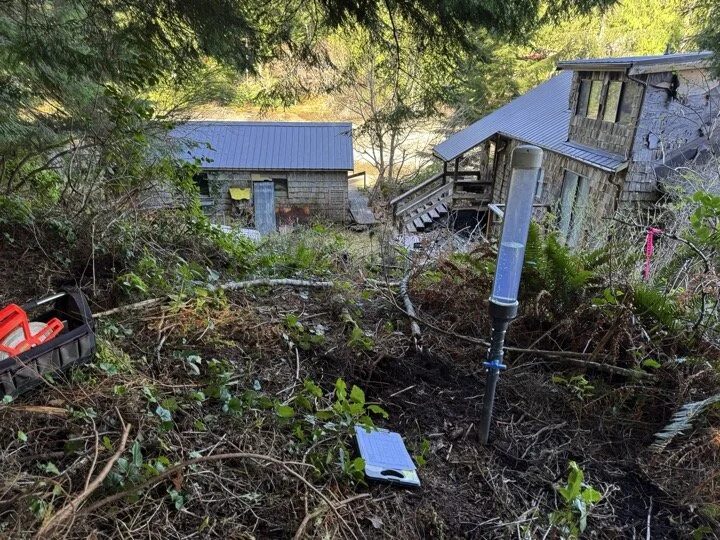
Why this matters to a buyer: unsaturated soil is roughly 100 times more effective at treating effluent than saturated soil, and that ratio is the whole reason vertical separation requirements exist. A site that looks like beautiful dry ground in July can be a site with almost no usable separation in February — and a field installed into ground that saturates every winter clogs and fails, sometimes within a few years.
Two Island-specific traps ride along with this:
- Clearing trees raises the water table. Mature timber moves an enormous amount of water. Take the canopy off and the natural discharge capacity of the site drops measurably, which can quietly consume the vertical separation a design was counting on. If you are buying treed land to clear it, the septic assessment should assume the cleared condition.
- "It's only a summer place" is rarely true. Owners of recreational lots genuinely believe they use the property in the dry season, and then visit at Christmas and Easter — the wettest weeks of the year, when available separation is at its worst.
If you are viewing a rural property in July and the deal allows it, there is real value in either getting a professional read before subjects come off, or writing the wastewater question into your conditions rather than assuming.
The Property Disclosure Statement helps, but only so far
The standard BCREA Property Disclosure Statement (form BC1008) asks the seller what system the land is connected to, whether they are aware of problems with it, whether service contracts exist, and — usefully — whether maintenance records are available for a septic system installed after May 31, 2005.
Read the wording carefully. "Are you aware of any problems" is a disclosure of the seller's knowledge, not a condition report. A seller who has never had the tank pumped and has never seen a maintenance provider can answer honestly and still hand you a failing field. The PDS is a starting point for questions, not a substitute for the records or for eyes on the ground.
What this actually costs, against what it saves
- Island Health records release: $50 per property. The cheapest due diligence available on a rural purchase.
- A free Lot Snapshot: type the address or PID and see the creeks, wells, slope and land-use rules that bear on a septic system, in about 30 seconds, with no sign-up.
- A Desktop Site Assessment, from $299: every public record that bears on a septic system for the lot, compiled into one report. $349 adds the title search; $499 adds the Island Health records search, read and signed by me.
- An on-site assessment, $1,249: everything in the Desktop Site Assessment, plus test pits, percolation testing and measured setbacks on the lot. For a house with a system, I arrange the tank and field inspection and tell you what the results mean for your purchase.
- A residential septic design, if a new system is needed: starting at $3,490 for systems that follow the Standard Practice Manual, plus the Island Health filing fee.
- Installation, priced once the design is done: roughly $20,000 to $30,000 for a Type 1 gravity system, $25,000 to $45,000 for pressure distribution, $35,000 to $55,000 for a sand mound or sand-lined bed, and $15,000 to $35,000 on top if the site requires Type 2 or Type 3 treatment. Remote and boat-access sites sit above those ranges.
The asymmetry is the point. Fifty dollars and a phone call, against a system replacement you had not budgeted for.
Frequently asked questions
How do I find out if a property has a filed septic system?
Order the records from Island Health using its Request for Release of Information form — $50.00 per property. Island Health indicates records should exist for all systems from 2005 onward and most systems from 1990 to 2005. If nothing comes back for a property with an obviously older system, that is not necessarily a problem, but it does mean you are buying without documentation and should have someone look at the system itself.
Does Island Health inspect or approve septic systems?
No. Island Health states plainly that it does not approve the design and does not routinely review filing documents for technical merit. BC uses a professional-reliance model: the Authorized Person who files and certifies the system carries the responsibility. A filed record tells you a qualified person put their name to the work — it is not a regulator's inspection.
Can I get a septic inspection as a condition of purchase, like a home inspection?
You can, and on a rural property it is worth doing. What is available ranges from a maintenance provider opening the tank and checking the filter, baffles and sludge depth, through to a professional site assessment that looks at soils, water table and whether the lot could support a replacement system. Which one you need depends on the age of the system, whether records exist, and how much of your plan for the property depends on the answer. I can arrange the tank and field inspection and tell you what the results mean for your purchase.
There is a septic covenant on the title of a property I want to buy. Is that a deal-breaker?
Usually not, but it should be priced in. Most Section 219 septic covenants on Island titles are pre-2005 relics registered under the old Health Act, and standards and available system types have changed enough since that many restricted parcels can now be shown to support a compliant modern system. Removal or modification typically runs five to ten weeks. Send the PID and a copy of title for a free desktop review and you will get a plain answer on whether removal looks straightforward before you commit to anything.
The house has more bedrooms than the filed system was designed for. What happens?
The system is undersized for the dwelling, and the practical risk is a shortened field life rather than an immediate failure. It is worth resolving before you buy, because the fix is generally a new or expanded system rather than a repair — and because if you later add a suite or a bedroom of your own, you inherit that problem too. Get a professional read on what the lot can support at the flow the house actually generates.
Get the wastewater question answered before subjects come off
Start with the free Lot Snapshot: type the address and see what the public records say about the lot in about 30 seconds. If it raises questions, the Desktop Site Assessment and the on-site assessment take it further, each with a price before you commit. If the house already has a system, I can arrange the tank and field inspection and tell you what the results mean.
Get in touch, or read more about inspection, maintenance and repair of existing systems, the residential septic design service, the pricing ranges, and the buying and covenant questions in the FAQ.
About the author: Jordan Huscroft is a registered Professional Geoscientist (P.Geo., EGBC) with a master's degree in Integrated Water Resource Management from McGill University's Department of Bioresource Engineering and EOCP certification as a small wastewater systems operator. He is the principal of Pacific Rim Wastewater Solutions Ltd., based in Port Alberni, where he designs residential and commercial onsite sewerage and septic systems across Central Vancouver Island. He specializes in subdivision assessments and also handles waste discharge authorization permitting.
Sources: Island Health — Sewerage & Subdivision · Island Health — Property Owner's Sewerage Process · Sewerage System Regulation, B.C. Reg. 326/2004 · BCREA Property Disclosure Statement, form BC1008 (Rev. Nov 2021) · Sewerage System Standard Practice Manual, Version 3.
Related reading
How to Modify or Remove a Septic Covenant on Vancouver Island (2026 Guide)
November 27, 2025 · 6 min read
Type 1, Type 2, and Type 3 Septic Treatment Explained for Island Homeowners
July 15, 2026 · 10 min read
Is My Property Sub-dividable? Understanding Septic System Requirements for Lot Subdivision on Vancouver Island
August 25, 2025 · 3 min read