
Our Services
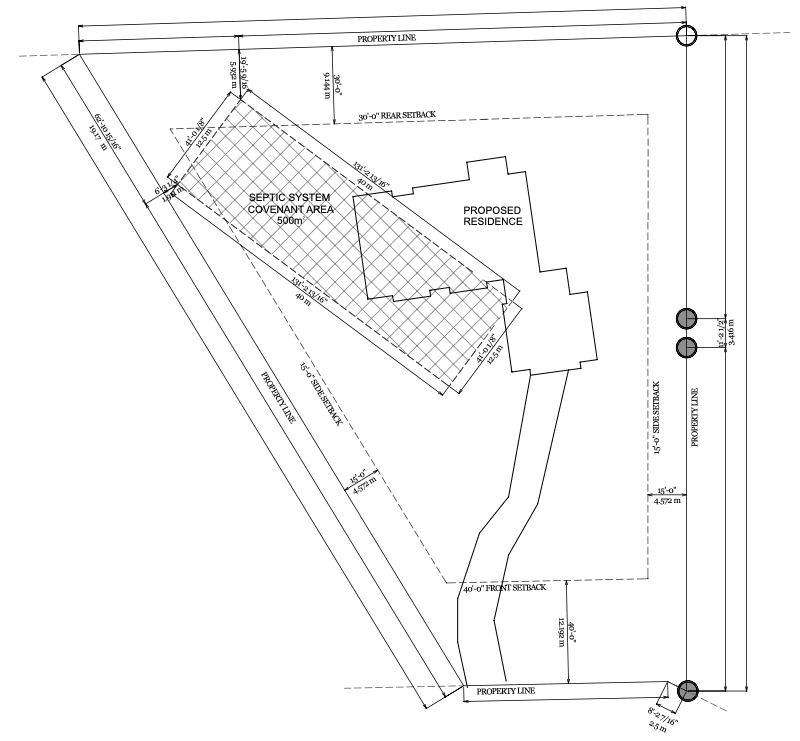
Septic Covenant Removal
Septic covenant removal discharges the old Section 219 covenant that reserves part of your land for a septic field you may never build. Owners blocked from building a shop, suite, or addition need it, and so do Realtors with a deal on the line. Pacific Rim Wastewater Solutions assesses the site, prepares the sealed release package, and sees it through Island Health and Land Title — typically in 5–10 weeks.
Thousands of Vancouver Island properties carry Island Health septic covenants that lock up prime building ground. They're removable — and I specialize in removing them fast, reliably, and permanently, so you can build the shop, suite, or addition your title currently forbids.
For owners of rural property with a Section 219 septic covenant on title — and for Realtors whose deals depend on getting one removed.
A proven 5–10 week process
From site assessment and test pits to final Land Title registration, most covenants are fully removed in 5–10 weeks — my last three clients all had theirs removed in under 7 weeks. The four phases: technical feasibility assessment (2–4 weeks), covenant release package (1 week), Island Health review (1–2 weeks), and Land Title registration (usually the same week).
The Professional Geoscientist advantage
Island Health won't open an application without a Covenant Assessment Letter sealed by an Authorized Person. As a P.Geo. with deep hydrogeology expertise, my sealed letters are approved faster and with fewer follow-ups than typical ROWP submissions — on marginal sites I've seen applications rejected under a ROWP letter, then approved in under two weeks under a P.Geo. seal with no changes to the data.
Free initial review
Send your PID (or civic address) and a copy of your title showing the covenant, and I'll do a no-cost, no-obligation desktop assessment. I'll tell you straight up whether it's straightforward or what fieldwork would be required — you only proceed if we both agree it's worth doing.
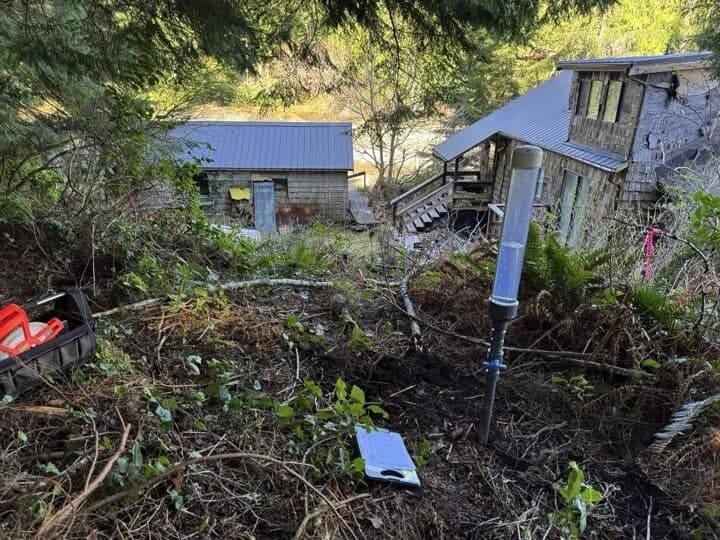
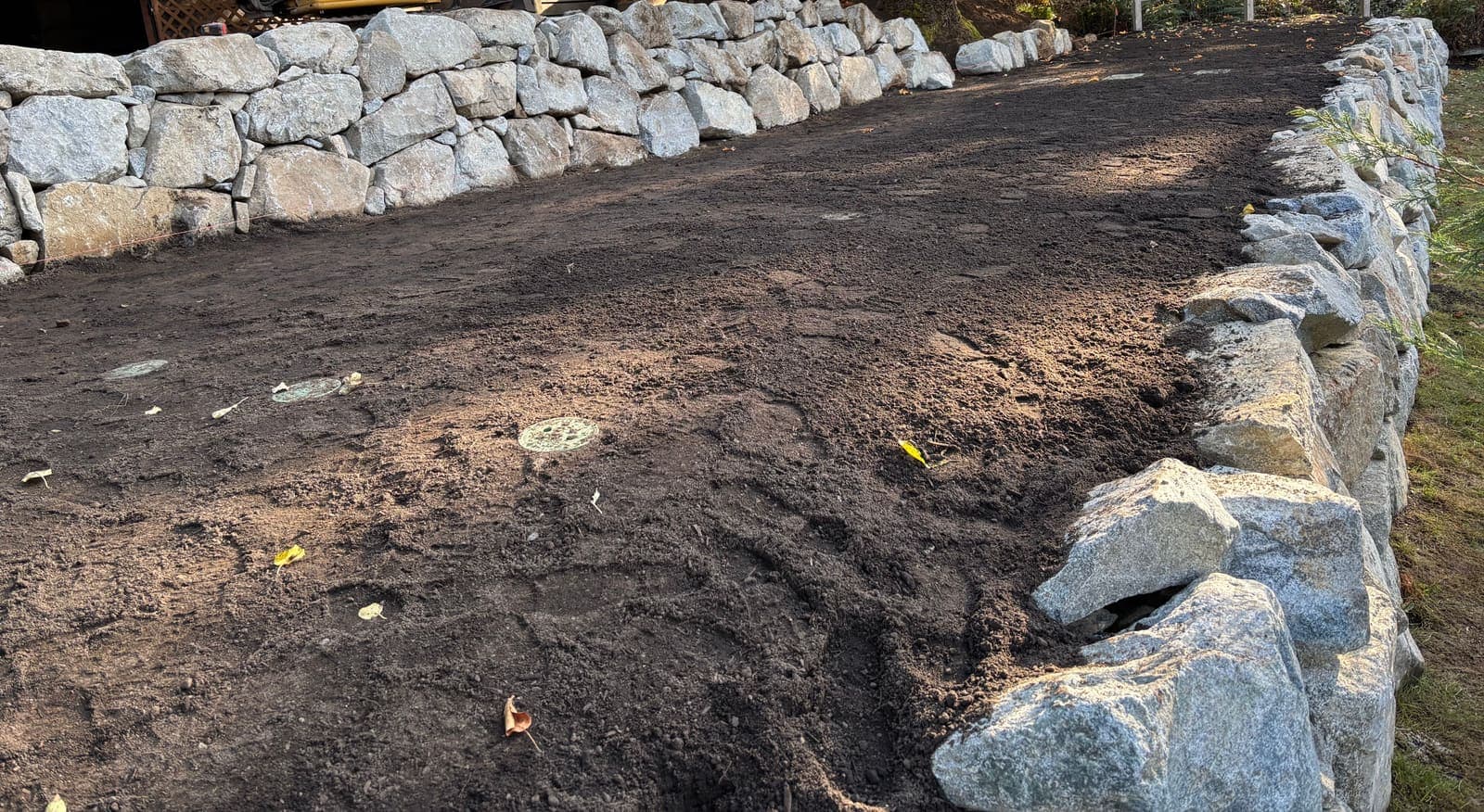
What does this look like in the field?
Photographs from real Vancouver Island projects. Client identifying details are deliberately kept out of frame — see project case studies for the full write-ups.
Frequently asked questions
Why does my property have a septic covenant?
Most were registered to reserve an area of land for a future septic field, or because a parcel could not be shown at the time to support onsite sewage disposal. Historically the health authority could require a Section 219 covenant when a lot was created or a system permitted. Many are old, but not all of them are — covenants newer than the 2005 Sewerage System Regulation do exist. The problem is rarely the covenant's age. It is that building plans change, and an overly restrictive covenant can rule out the more advanced treatment that would make a previously unsuitable area perfectly workable today.
What does it cost to apply?
Island Health charges a $200 administrative fee for the release application, plus your legal costs for the Land Title Form C and my assessment work — which starts with the free desktop review.
What moves the price of a covenant removal?
Mostly how much fieldwork the file needs. A property with an obvious alternative dispersal area, good access, and clean title takes far less work than a steep, treed, or boat-access lot where test pits must prove marginal ground. Multiple covenants, a covenant tied to a system that also needs replacing, or extra Island Health questions add scope. The free desktop review tells you which category you're in.
My covenant predates 2005. Does that make it harder or easier?
Easier, generally — that's the normal case. Nearly every septic covenant of this kind was registered under the old Health Act before the Sewerage System Regulation took effect on May 31, 2005. The 2005 regulation replaced covenant-based control with the filing and certification system, so the technical argument is usually that the reserved area is no longer the mechanism protecting public health on your lot.
Do I need a P.Geo., or can a ROWP handle it?
Island Health requires a Covenant Assessment Letter sealed by an Authorized Person, and a ROWP can be that person. Where a professional helps is on marginal sites: soil, groundwater, and setback arguments that need hydrogeological reasoning to survive review. A sealed professional opinion carries that reasoning, which is why difficult files often move faster with a P.Geo. than with a straight practitioner letter.
How long does it actually take?
Most files run 5–10 weeks end to end: technical feasibility assessment 2–4 weeks, covenant release package about a week, Island Health review 1–2 weeks, and Land Title registration usually the same week it's filed. Winter ground conditions and Island Health's queue are the two things I can't compress. I'll tell you which stage you're in throughout.
What if the covenant can't be removed outright?
Often it can be modified instead, which solves the real problem. If your building envelope conflicts with only part of the reserved area, the covenant can sometimes be amended to relocate or shrink that area rather than discharged entirely — you get the ground you actually need. I'll say plainly at the desktop-review stage if full removal looks unlikely, before you spend anything.
Who holds my covenant — does that change the process?
Check the Form C on your title. Most of these covenants are registered in favour of the health authority or the Crown, which is the path I handle routinely. Some rural lots also carry covenants in favour of the regional district or a former owner, and those need a different discharge route through that party and your lawyer. The desktop review identifies which you have.
Will removing the covenant affect my existing septic system?
No — discharging the covenant changes what your title restricts, not how your system works. Your existing system stays exactly as it is and keeps its own obligations for maintenance and, if it's Type 2 or 3, servicing. What changes is that the reserved area stops blocking construction, so the shop, suite, or addition becomes possible.
Related reading: How to Modify or Remove a Septic Covenant on Vancouver Island
Is a covenant holding your property hostage?
Email your PID and title today — you'll have a free desktop review.