
Service Areas / Tofino & Ucluelet
Septic System Design in Tofino & Ucluelet
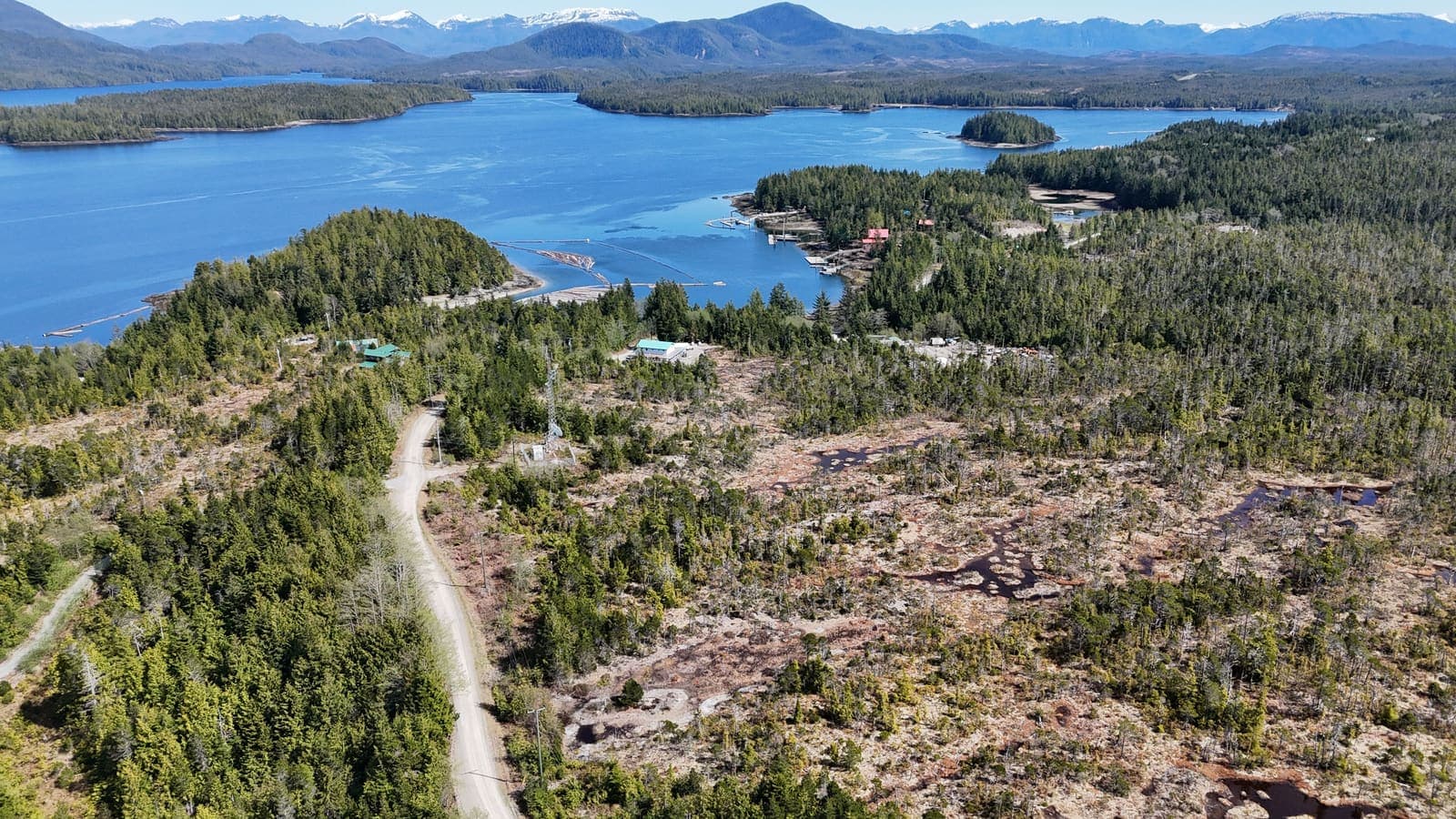
Tofino and Ucluelet are the hardest septic sites on this coast: thin organic soils over bedrock, more than three metres of rain a year, and shoreline setbacks near shellfish-bearing waters. These parcels routinely need advanced design — imported sand, raised beds, pressure distribution, or Type 2 and 3 treatment — supported by hydrogeological analysis a P.Geo. can seal.
For west coast homeowners, cabin and vacation-rental owners, resorts, and lodges in Tofino, Ucluelet, Millstream, and along the Pacific Rim Highway.
Why is west coast septic design so difficult?
Tofino records on the order of 3,270 mm of precipitation in an average year — several times what the island's east coast receives — and much of the Esowista Peninsula and the Ucluelet headland carries only a thin mantle of organic and podzolic soil over rock. Thin soil plus enormous infiltration means the two things a dispersal field needs most, unsaturated depth and drainage capacity, are often the two things the site does not naturally have. Designs here are engineered around that shortfall rather than pretending it away.
What does a typical west coast solution look like?
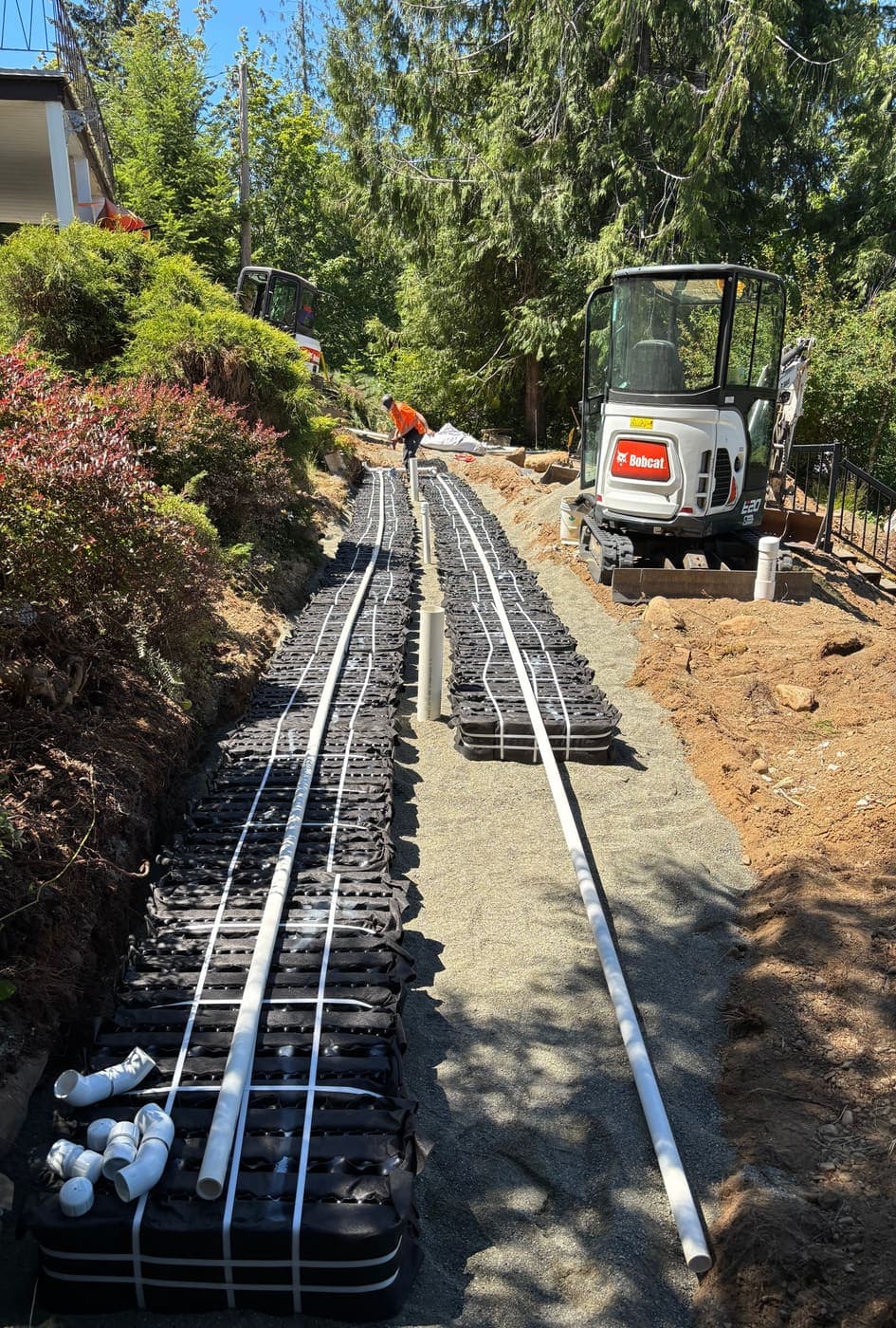
Where native soil cannot deliver the required vertical separation, the usual answer is to build it: imported sand or sand-lined dispersal beds, raised or mounded fields, and pressure distribution to spread effluent evenly instead of overloading one end of a shallow field. Where the footprint simply is not available, higher treatment — Type 2 or Type 3 — reduces the dispersal area required. Which of those routes is cheapest for your lot is a site-assessment question, not a catalogue question.
Shoreline setbacks and shellfish waters
Fisheries and Oceans Canada publishes bivalve shellfish contamination information for the tidal waters around Tofino, Meares, Vargas, and Flores islands, and sanitary closures in those waters are directly relevant to how shoreline wastewater is handled. Combine that with marine and freshwater setbacks under the SPM and with high winter groundwater, and waterfront lots in Clayoquot and Barkley sounds have less usable ground than their acreage suggests.
Vacation rentals, resorts, and design flow
Flow is the first number that matters on a commercial west coast project. Residential design flow is driven by bedroom count; a lodge, resort, restaurant, or campground is driven by fixture counts, seats, and occupancy patterns that swing hard between shoulder season and August. Medium-flow design below the 22,700 L/day limit stays within Island Health's jurisdiction, which keeps approval in one predictable regulatory stream instead of triggering the Ministry of Environment's Municipal Wastewater Regulation.
Access, logistics, and honest scheduling
Tofino and Ucluelet are roughly a two-hour drive from Port Alberni over Highway 4, and material delivery, excavator availability, and imported sand all cost more out here than they do in the valley. That is a real budget item and you should hear about it before the design, not after. Site visits are scheduled to combine trips where possible, and the design package typically follows within one to two weeks of the assessment.
Regional ground conditions above are general tendencies drawn from published geological, regional district and health authority sources. They describe what is commonly found in the area — never what is under a specific parcel. Only test pits and a site assessment establish that.
Which services matter most in Tofino & Ucluelet?
Residential Septic System Design
Residential septic design for Vancouver Island homes by a P.Geo. — site assessment, SPM V3 design, Island Health filing and certification, often within a week.
Residential Design details →Commercial Sewerage System Design
Medium-flow commercial septic design (up to 22,700 L/day) for Vancouver Island campgrounds, resorts, RV parks and marinas — P.Geo.-sealed, Island Health filed.
Commercial Design details →Wastewater Discharge Permit Compliance
Waste discharge permit compliance on Vancouver Island: effluent and marine sampling, flow monitoring, ROV marine outfall inspections, annual reporting support.
Permit Compliance details →Homeowner Installation Oversight
Install your own Type 1 septic system on Vancouver Island: P.Geo. design, step-by-step manual, on-site inspections, Island Health filing and certification.
Owner-Build Oversight details →See all services or typical design and installation costs.
Tofino & Ucluelet septic questions
Can you build a septic system on bedrock in Tofino?
Usually yes, but not conventionally. Where soil depth over rock is insufficient, the design imports engineered sand to create the required treatment depth — a sand-lined or mounded dispersal bed — and often pairs it with pressure distribution or higher-level treatment. The site assessment establishes how much depth is actually there before anything is designed.
Does all that rain mean my system has to be bigger?
Not in the sense of more bedrooms meaning a bigger field — dispersal fields are sized on wastewater flow. But rainfall does directly reduce the hydraulic loading rate the soil is credited with. The Standard Practice Manual requires the standard HLR to be multiplied by 0.85 where average annual precipitation is between 1,800 and 3,000 mm, and by 0.75 above 3,000 mm. Tofino sits above 3,000 mm, so west coast fields carry a 25 per cent reduction in loading rate before any other site factor is considered — which does mean a larger dispersal area. On top of that, heavy year-round rainfall raises seasonal water tables and saturates shallow soils, reducing available vertical separation and frequently pushing a west coast site toward a raised bed or a higher treatment type.
Do I need a different system for a vacation rental?
Possibly. If the property is used at higher occupancy than a single family home, the design flow changes, and an intermittently used system also behaves differently from a continuously loaded one. Tell the designer honestly how the property will be used — a system sized for the wrong use is the most expensive mistake on this coast.
How close to the ocean can a dispersal field be?
The SPM sets minimum horizontal setbacks from marine and fresh water, and those are the starting point rather than the negotiating point. Where a setback genuinely cannot be met, a P.Geo. can prepare the hydrogeological justification for a reduced setback — but that is technical work with a seal on it, not a form.
More general questions are answered on the FAQ hub.
Nearby service areas
Planning a project in Tofino & Ucluelet?
Describe the parcel and you will get a straight answer about what is needed and how soon a site assessment can happen.