
Our Services
Homeowner Installation Oversight
Homeowner installation oversight lets you dig and build your own Type 1 septic system while a professional handles the parts the law reserves for an Authorized Person. It suits capable owner-builders with excavation access. Pacific Rim Wastewater Solutions provides the design and a step-by-step installation manual, inspects each critical stage, files with Island Health, and issues the final certification.
Handy homeowners can legally install their own Type 1 septic system in BC — if the design, oversight, and certification are handled by an Authorized Person. I provide full professional design, filing, and certification for owners who want to do the digging themselves and save meaningfully on installation costs.
For owner-builders and hands-on rural property owners installing their own Type 1 system anywhere on Central Vancouver Island.
Enhanced design package
Detailed construction drawings plus a comprehensive, step-by-step installation manual tailored to your project — written for a capable owner with an excavator, not for a contractor who's built a hundred systems.
Hands-on oversight and collaboration
I work directly with you throughout the build, providing mandatory on-site inspections at every critical stage to ensure the system is installed correctly and meets all regulatory requirements. You're never guessing at whether a stage is right before you bury it.
Complete filing and certification
Record of Sewerage System (RoSS) submitted to Island Health for your building permit, followed by the final Letter of Certification (LoC) for occupancy — the same professional paper trail a contractor-installed system gets.
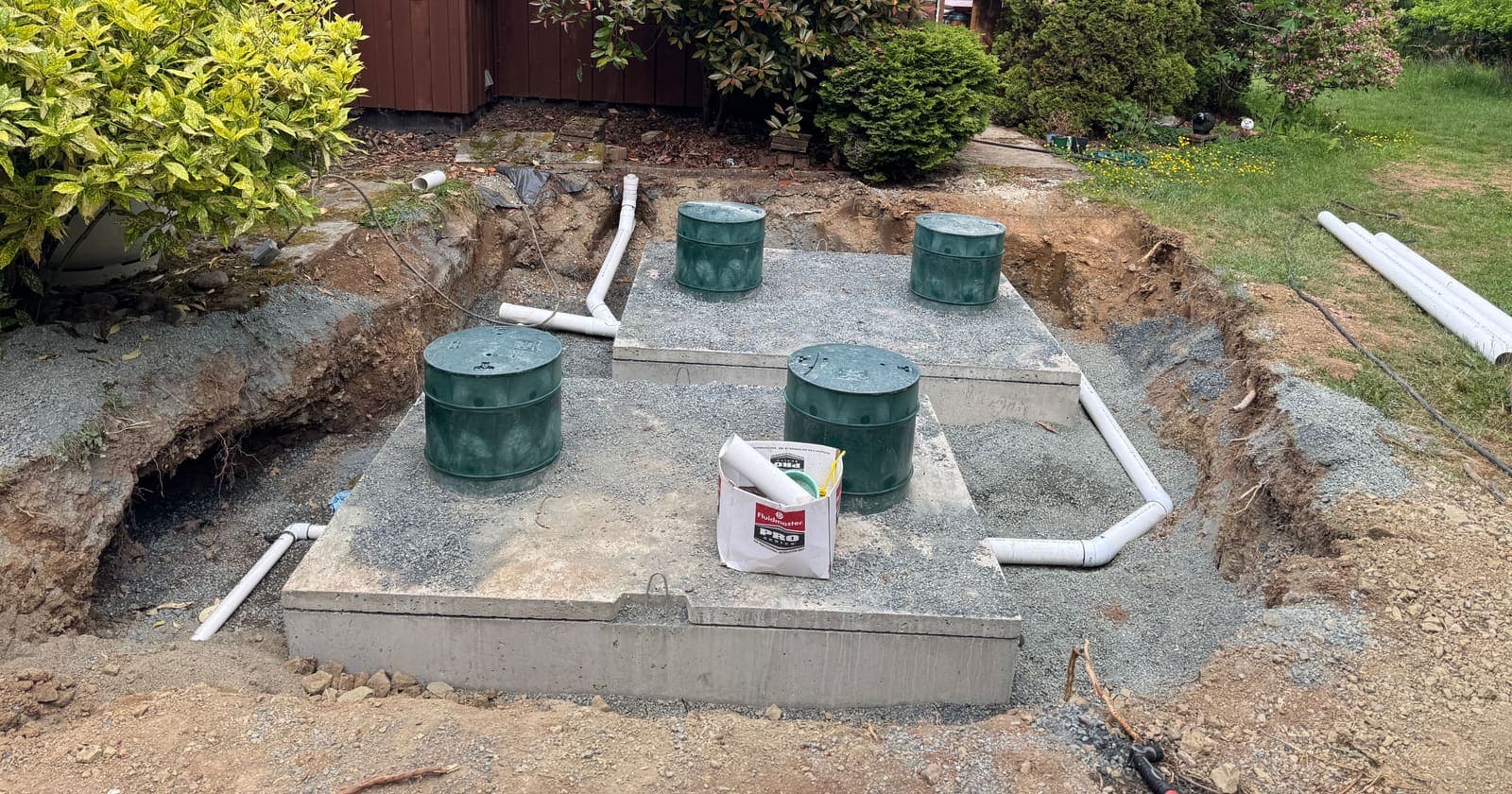
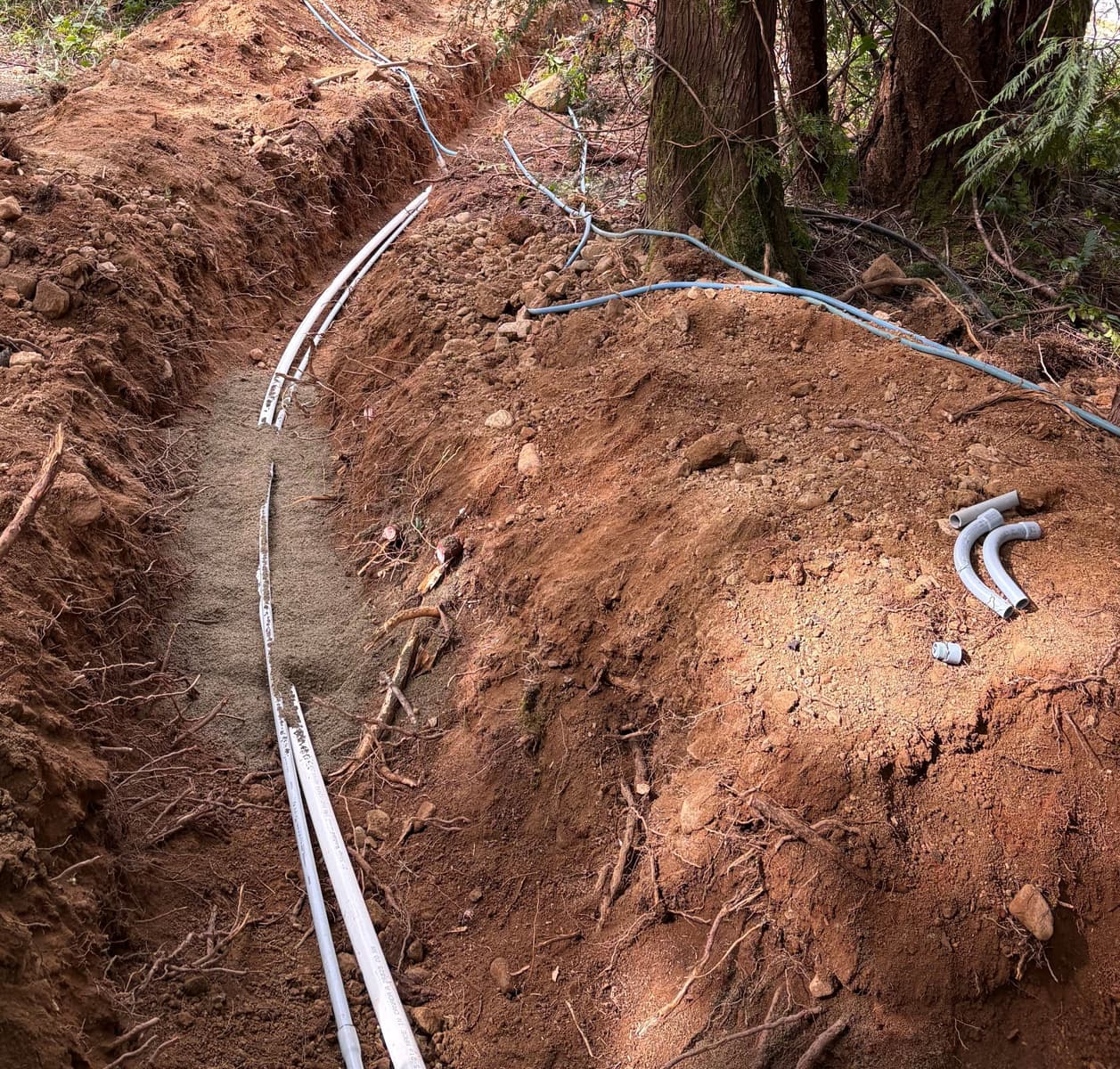
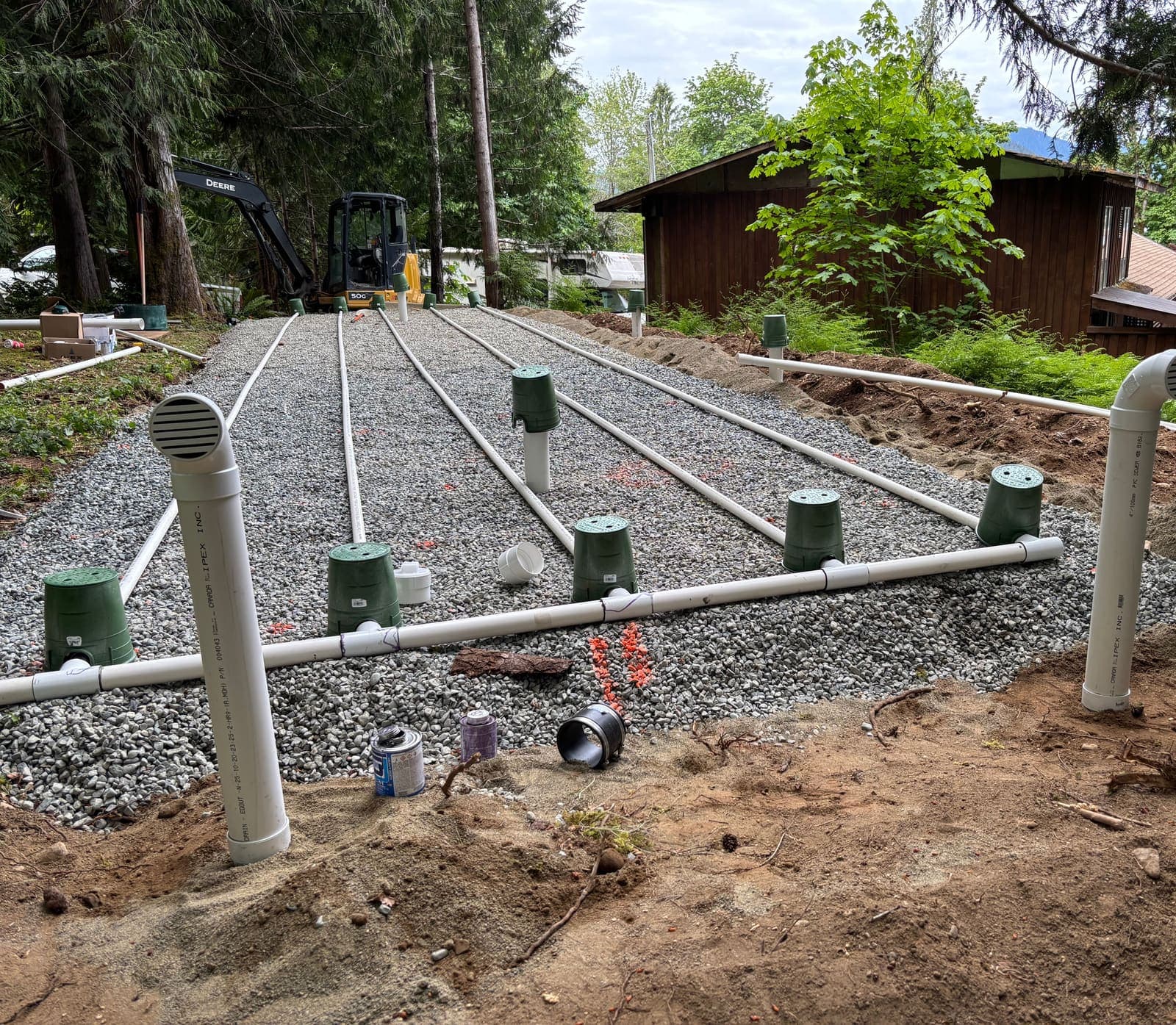
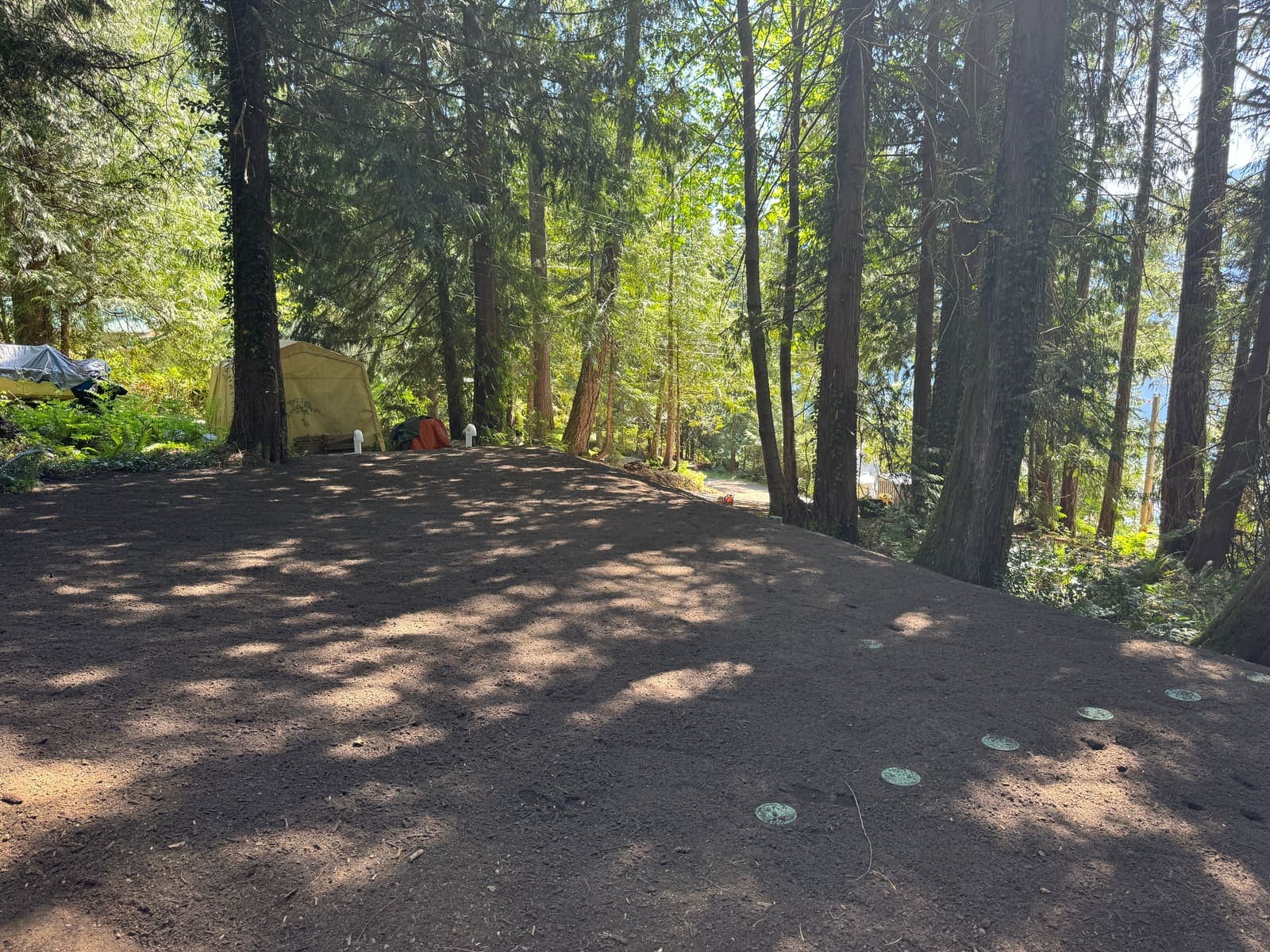
What does this look like in the field?
Photographs from real Vancouver Island projects. Client identifying details are deliberately kept out of frame — see project case studies for the full write-ups.
Frequently asked questions
Can I really install my own septic system in BC?
Yes — a homeowner may design or construct their own Type 1 system provided it is done under the supervision of a professional or Authorized Person, who designs, oversees and certifies it under the Sewerage System Regulation. The oversight structure is exactly what this service provides.
How much can I save?
Generally the savings are less than you would imagine. The material still has to be trucked to site, an excavator still has to be on the ground, and the tanks, pump, panel and pipe cost what they cost. What you are really substituting is your own time, and there is a lot of it. A registered installer is very efficient and gets the job done properly and quickly, and that efficiency is worth real money. Owner-building makes sense when you genuinely have the equipment, the capability and the time — not as a default way to cut the bill.
What does oversight cost, and what changes the price?
The design work is comparable to a standard residential design; oversight adds inspection visits, and visits are where site location shows up in the price. A Port Alberni build is straightforward to attend; a Bamfield or remote lot means travel time per stage. Site complexity, treatment type, and how much hand-holding you want during construction also move the number.
Do I need a P.Geo. for this, or will a ROWP do?
A ROWP is an Authorized Person and can design and certify a Type 1 owner-build. The professional route matters when your site isn't simple — thin soils, high water table, steep ground, tight setbacks to a lake or well — because those designs lean on hydrogeological judgment and may need justified departures from standard practice. If your site is straightforward, say so and I'll tell you honestly.
Can I install a Type 2 or Type 3 system myself?
Generally it is not recommended. The cost of doing so is usually prohibitive, because advanced systems require far more oversight from the professional or Authorized Person, and that oversight is not optional. These systems also involve specialised machinery and specialised treatment equipment that has to be working correctly to prevent risks to the environment and to human health. They are important to get right. If your site needs advanced treatment, ask before you plan around doing the work yourself.
What equipment and skills do I actually need?
Realistically: access to an excavator you can operate competently, a way to move gravel and sand on site, the patience to work to grade, and a willingness to stop and call before burying anything. Levels and grades are where owner-builds most often go wrong. Professionals bring a wide range of skills to make sure the job is done properly, and there is no way to confirm from the outside whether any given homeowner has them. Designing or installing your own septic system is not for everybody, and a genuine level of confidence and capability is required before attempting it.
How much construction oversight is required?
This is a genuinely flexible point, and it gets discussed rather than dictated. The critical stages are the ones where mistakes become invisible: excavation and native soil condition, tank set and connections, distribution piping and dispersal media placement, and final cover and grading. How each of those is verified can be adapted — phones, photographs and video have changed what needs an in-person visit, and the arrangement can be shaped around the client. What does not flex is that every step has to be discussed thoroughly with the Authorized Person beforehand, so both sides know what is being done and how it will be confirmed.
What if I get something wrong?
You fix it before it is buried, which is the whole point of staged oversight. If a system is not installed to the standard the designer requires, specific components of it may need to be reinstalled to meet that standard before the Letter of Certification can be issued. As long as that is understood from the outset and the guidance of the professional is followed carefully, these situations are rare. Where they do become difficult, it is almost always because the working relationship started badly — which is why the expectations conversation happens before the excavator arrives, not after.
Want to build it yourself — properly?
Tell me about your site and timeline, and I'll walk you through how owner-build oversight works.